Cuplock and Ringlock Scaffolding: A Professional Comparison for Modern Construction
In the landscape of modern construction, the choice of scaffolding system is a critical decision that directly impacts safety, efficiency, and project economics. Among the most widely adopted modular systems are Cuplock and Ringlock scaffolding. While they may appear similar to the untrained eye, they differ fundamentally in design philosophy, connection methodology, and application suitability. This article provides a professional breakdown of their key differences to help engineers and procurement specialists make data-driven decisions.
The Fundamental Design Distinction
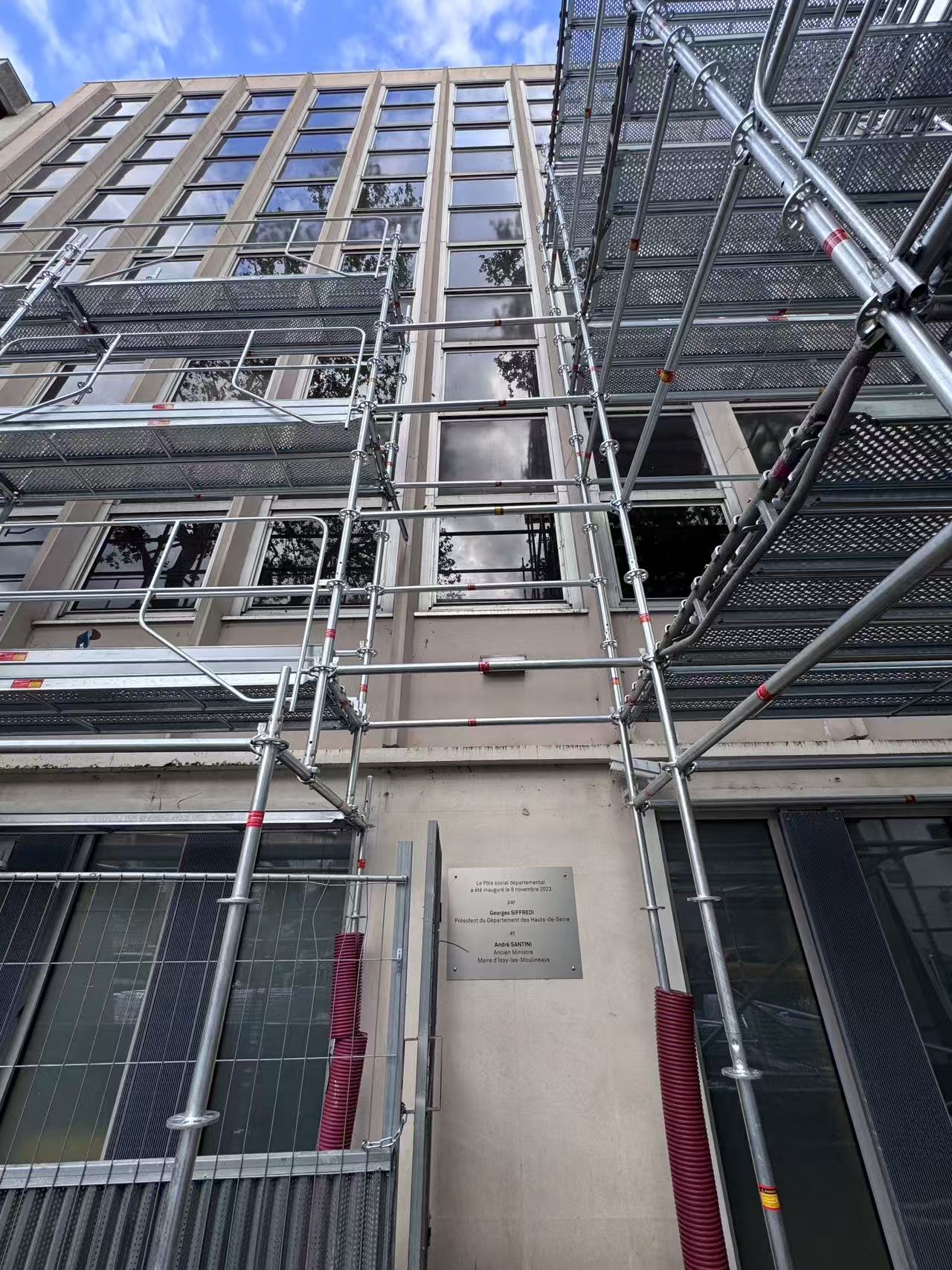
The core difference between these systems lies in their connection mechanisms. Cuplock utilizes a cup-and-blade system: fixed cups are welded onto vertical standards at 500mm intervals, and horizontal ledgers with forged blades are set into the lower cup, then secured by twisting a top cup down over the blade. This design permits up to four horizontal connections per node, primarily at right angles.
Ringlock scaffolding, by contrast, employs a rosette (disc) and wedge mechanism. A circular rosette welded onto the standard provides up to eight connection points, allowing horizontals and braces to be attached at multiple angles through a simple hammer-strike wedge lock. This difference in connection design establishes distinct application profiles and performance characteristics for each system.
Key Performance Comparisons
| Aspect | Cuplock Scaffolding | Ringlock Scaffolding |
| Connection Mechanism | Cup-and-blade system; top cup twisted over ledger blades | Rosette disc with wedge lock; secured by hammer strike |
| Maximum Connections Per Node | 4 horizontals (90° only) | 8 connections (including 45°, 90°, 135° angles) |
| Load-Bearing Profile | Excellent vertical load capacity (up to 55kN per standard) | Superior multi-directional load distribution and lateral stability |
| Assembly Speed | Very fast; tool-free drop-and-lock operation | 30–50% faster than Cuplock; single hammer strike per connection |
| Geometric | Limited to right-angle, rectilinear configurations | Highly adaptable to curves, slopes, and complex geometries |
| Flexibility | rectilinear configurations | and complex geometries |
| Storage & Logistics | Bulky components due to fixed cup protrusions | Compact stacking design; reduced transport space |
| Primary Applications | Formwork support, facade access, shoring, birdcage scaffolds | Complex industrial structures, curved facades, arenas, bridges |
| Cost Profile | 20–30% higher initial cost than traditional systems | 15–25% higher initial cost than Cuplock; superior long-term ROI and turnover rates |
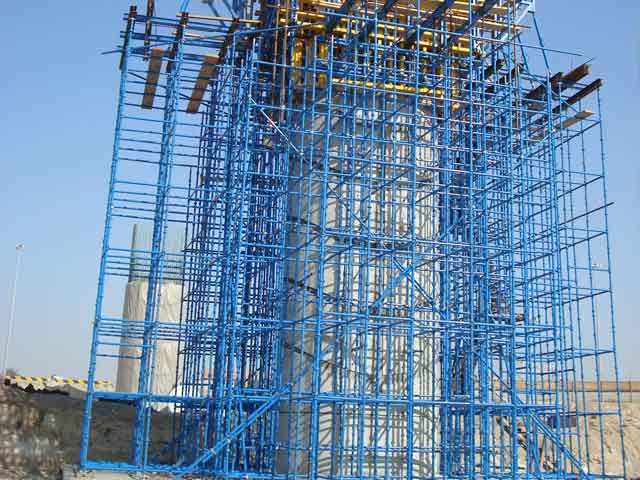
Why Ringlock is Gaining Preference for Complex Projects
For general access scaffolding on rectilinear buildings or heavy-duty shoring with predictable vertical loads, Cuplock remains a cost-effective and proven choice. Its tool-free assembly and high vertical load-bearing capacity make it well-suited for straightforward facade work and slab formwork support.
However, for projects with curved geometries, multi-level structures, irregular facades, or dynamic load conditions, Ringlock offers unparalleled versatility. The eight-way rosette enables diagonal bracing in any direction, providing superior lateral stability under wind loads and rotational stresses. Additionally, Ringlock's single-wedge connection has been shown to reduce erection labor time by 30–50% compared to Cuplock's manual cup adjustment process.
ADTO Group: Manufacturing Excellence in Both Systems
ADTO Group, founded in 1998, has established itself as a comprehensive manufacturer of both Cuplock and Ringlock scaffolding systems, backed by substantial production capacity and international certifications.
With 23 dedicated scaffolding production lines and nearly 300 advanced manufacturing and processing facilities, ADTO achieves an annual capacity of 150,000 tons of scaffolding products. The company operates subsidiary steel tube production lines and hot-dipped galvanizing facilities, ensuring vertical integration and quality control throughout the manufacturing process.
ADTO's commitment to international standards is validated by its ISO 9001 certification and compliance with CE, AS/NZS, EN131, JIS, and RISE requirements. The company serves as a designated supplier to world-renowned enterprises including PetroChina and Sinopec, with products exported to over 100 countries across Europe, America, Oceania, the Middle East, Asia, and Africa.
Both ADTO Cuplock and Ringlock systems are manufactured using premium Q235 and Q355 (Q345) steel, with hot-dip galvanized finish delivering a service life exceeding 20 years for Ringlock and 15 years for Cuplock components. ADTO's Ringlock system, recognized as a "Quality Brand" in Zhejiang Province, features high safety performance, strong bearing capacity, and high efficiency. Its successful application in key projects such as the Colombia Coal-fired Power Plant and Thailand's Mega Bangna Project demonstrates its proven performance in demanding environments.
Conclusion
The choice between Cuplock and Ringlock should be guided by project geometry, load requirements, and logistical constraints. Cuplock offers proven reliability and efficiency for rectilinear, vertical-load-dominated applications. Ringlock provides superior geometric flexibility, lateral stability, and labor efficiency for complex, multi-directional projects.
For procurement professionals seeking a single-source supplier with certified quality and substantial manufacturing capacity, ADTO Group's expertise in both systems, backed by ISO 9001 and multiple international certifications, delivers the versatility required to meet diverse construction demands globally.


评论
发表评论