What Are the Advantages of an Aluminium Formwork System
In the world of modern construction, the choice of formwork system is far more than a technical detail—it is a strategic procurement decision that directly influences project budgets, schedules, quality outcomes, and long-term profitability. While traditional timber and steel formwork have served the industry for decades, aluminium formwork systems have emerged as a game-changing alternative, particularly for high-rise residential and commercial projects with repetitive floor layouts.
From a buyer's perspective, the decision to invest in aluminium formwork is not simply about upfront cost; it is about total cost of ownership, construction efficiency, quality consistency, and sustainability. This article explores the compelling advantages of aluminium formwork systems and explains why ADTO Group stands out as a trusted supplier in this competitive market.
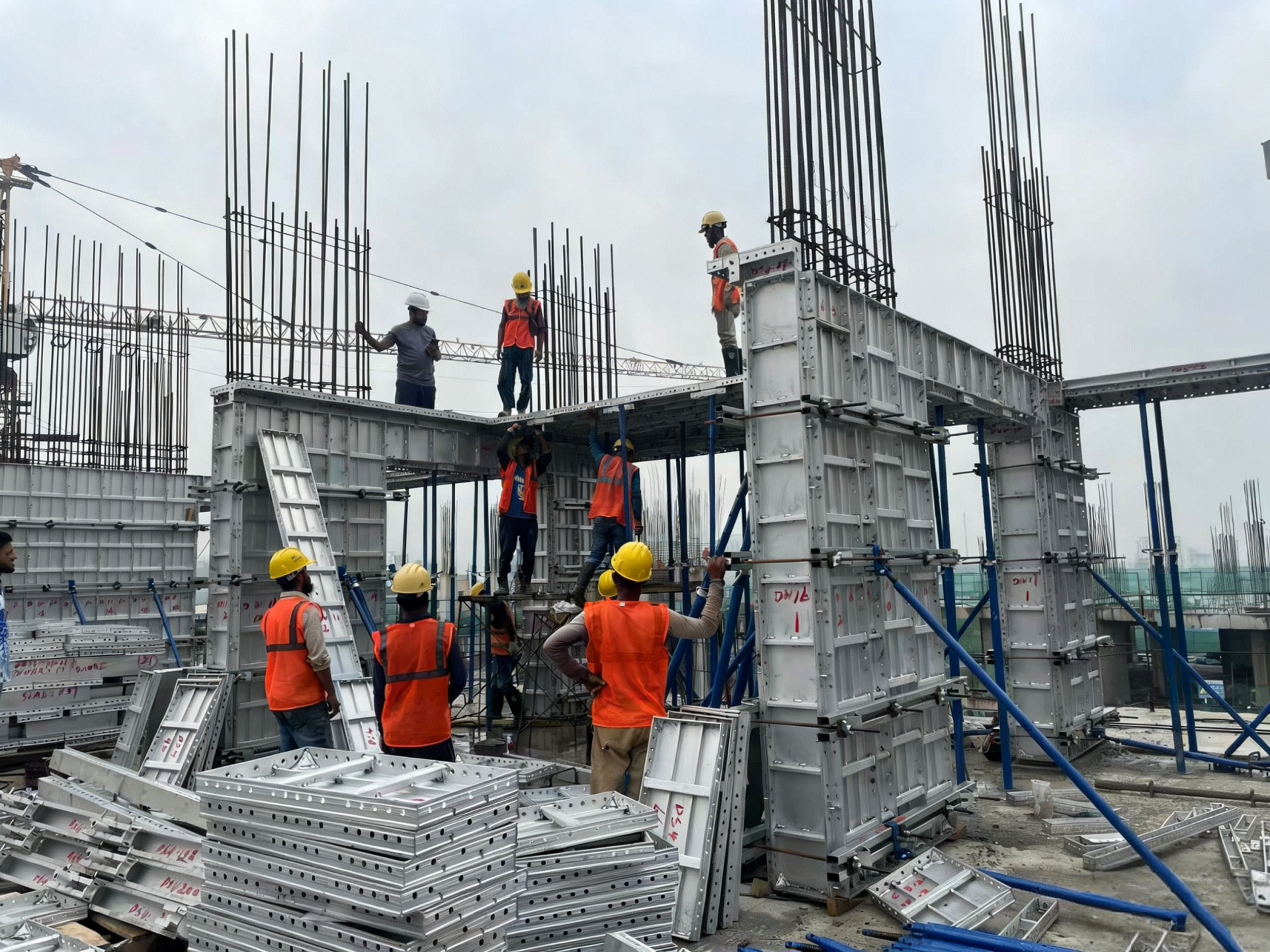
1. Unmatched Cost Efficiency Over the Full Lifecycle
For procurement professionals, the initial purchase price is only one piece of the puzzle. Aluminium formwork systems deliver exceptional value when evaluated across their entire lifecycle.
High Reusability Drives Down Per-Use Cost: A high-quality aluminium formwork system can be reused 300 times or more under proper handling and maintenance. While the initial capital outlay is higher than timber or steel alternatives—typically two to three times the cost of timber—the cost per use drops dramatically with each reuse. For a 30-storey residential tower, the per-square-metre formwork cost with aluminium can be 50–70% lower than using timber formwork, which often cannot be reused more than five to eight times.
Substantial Scrap Value: Aluminium does not degrade in quality through repeated use. At the end of its service life, the scrap value of aluminium formwork is remarkably high—often 60–90% of the original material cost. This residual value can be recovered, significantly offsetting the initial investment. No other formwork material offers such a favourable end-of-life return.
Reduced Indirect Costs: The precision of aluminium formwork eliminates the need for plastering or significantly reduces it by 30–60% on walls and ceilings. This translates directly into savings on materials, labour, and curing time. Furthermore, because aluminium formwork is lightweight (typically 22–25 kg/m²), it can be handled manually, reducing dependence on cranes and other heavy lifting equipment. This lowers equipment rental costs and frees up crane time for other critical tasks.
Zero Waste Disposal Costs: Unlike timber formwork, which generates substantial wood waste and debris, aluminium formwork produces virtually no construction waste on site. All components are fully reusable. This eliminates waste disposal fees and aligns with increasingly stringent environmental regulations.
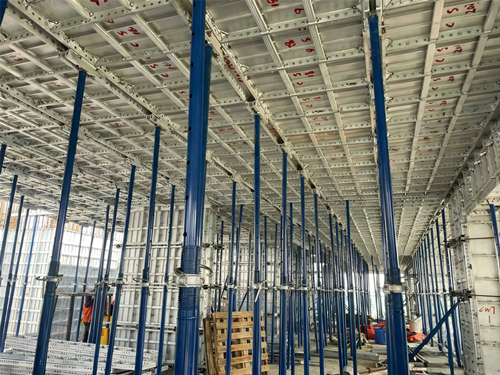
2. Exceptional Construction Speed
In construction, time is money. Aluminium formwork systems are engineered for rapid assembly and disassembly, directly accelerating project schedules.
Fast-Cycle Floor Construction: With a well-designed aluminium formwork system, a typical residential floor can be completed in 4 to 5 days—from formwork erection to concrete pouring and stripping. This is significantly faster than traditional timber systems, which often require 7 to 10 days per floor. For a 30-storey building, this translates to a potential schedule saving of 20 to 30 days—a critical competitive advantage in meeting contractual deadlines.
Modular and Intuitive Assembly: Aluminium formwork components are prefabricated and precision-engineered. They assemble like building blocks, requiring minimal on-site cutting or modification. Installation productivity is 30–50% higher than conventional formwork, reducing labour hours and exposure to weather delays.
Early Stripping Capability: The system allows for early stripping of vertical formwork while the slab formwork remains in place, enabling concurrent work activities on lower floors. This accelerates the overall construction cycle and optimises resource utilisation.
3. Superior Quality and Structural Precision
For any buyer, quality is non-negotiable. Aluminium formwork delivers exceptional concrete finish and structural accuracy that other systems struggle to match.
High Dimensional Accuracy: Aluminium formwork is manufactured using CNC machining and industrial-grade moulds, achieving tolerances within ±1 mm. The resulting concrete surfaces are exceptionally flat and smooth, with verticality and flatness typically within 5 mm. This eliminates the need for costly remedial work and provides an ideal substrate for paint, wallpaper, or tile installation.
Consistent Repeatability: Because the system is modular and re-usable, every floor replicates the same high-quality finish. This consistency reduces inspection and rectification costs and enhances the overall perceived quality of the finished building.
Excellent Load-Bearing Capacity: Aluminium formwork systems are engineered to withstand high concrete pressures—typically 60 kN/m²—ensuring safety and stability even during high-speed pours. The inherent strength of aluminium alloys (such as 6061-T6) resists deformation and maintains form integrity throughout multiple cycles.
4. Enhanced Safety and Workplace Ergonomics
Worker safety is a paramount concern for procurement teams, influencing both liability and productivity.
Lightweight and Manageable: Aluminium formwork panels are significantly lighter than steel alternatives, reducing the risk of manual handling injuries. Workers can easily carry and position panels without mechanical assistance, minimising ergonomic strain.
Stable and Secure: The system is designed with integrated pin-and-wedge or clamp connections that lock panels firmly in place, preventing unexpected movement during concrete pouring. Fall hazards are reduced because fewer overhead adjustments are required.
Fire and Corrosion Resistant: Aluminium is non-combustible and does not rust, even in humid or coastal environments. This eliminates fire hazards associated with timber formwork and ensures that the system remains safe and functional over many years of use.
5. Environmental Sustainability
With the global push toward greener construction, aluminium formwork offers clear environmental benefits.
100% Recyclable: Aluminium is infinitely recyclable without any loss of quality. At end-of-life, the material can be melted down and reused in new products, conserving natural resources and reducing landfill waste.
Reduced Timber Consumption: By replacing timber formwork, aluminium systems save thousands of cubic metres of wood over the life of a project. This helps preserve forests and reduces the carbon footprint associated with timber harvesting, transportation, and disposal.
Lower Carbon Emissions: The long lifespan and reusability of aluminium formwork, combined with its lightweight nature reducing transport energy, contribute to lower overall embodied carbon compared to single-use or short-life alternatives.
Why ADTO Group Is the Right Partner for Aluminium Formwork
For buyers evaluating suppliers, ADTO Group presents a compelling value proposition backed by decades of manufacturing expertise, robust quality assurance, and a global track record.
Premium Material and Design: ADTO's aluminium formwork is manufactured from 6061-T6 high-strength aluminium alloy, ensuring durability and dimensional stability. The system achieves a reuse cycle of 300+ pours and delivers a load capacity of 60 kN/m², meeting the most demanding project requirements.
Comprehensive Engineering Support: ADTO provides end-to-end technical services, including 3D modelling, design optimisation, and on-site installation guidance. This ensures that the formwork system is precisely tailored to the project’s geometry, minimising on-site modifications and maximising efficiency.
Certified Quality and Global Compliance: ADTO products carry ISO 9001, CE, and SGS certifications, confirming adherence to international quality and safety standards. The company’s integrated manufacturing facilities—spanning steel processing, aluminium extrusion, and hot-dip galvanising—ensure full traceability and quality control.
Proven Performance Worldwide: ADTO has supplied aluminium formwork systems to projects in over 100 countries, including major residential developments, commercial complexes, and infrastructure works. The company’s reputation is built on reliable delivery, responsive customer service, and products that perform consistently in diverse climatic and operational conditions.
Cost-Effective Procurement: With its own production lines and vertical integration, ADTO offers competitive pricing without compromising quality. The company supports flexible procurement models—whether outright purchase, lease, or lease-to-own—to accommodate different project budgets and financing preferences.
Conclusion
From a buyer's perspective, the advantages of aluminium formwork systems are clear and compelling: lower lifecycle costs, faster construction cycles, superior quality, enhanced safety, and environmental sustainability. These benefits are not theoretical—they are measurable and proven on thousands of projects worldwide.
When selecting a supplier, the choice of partner is as important as the choice of system. ADTO Group combines technical expertise, manufacturing scale, international certifications, and a customer-first approach to deliver aluminium formwork solutions that meet the highest standards of performance and reliability. For any buyer looking to invest in a formwork system that delivers long-term value and competitive advantage, ADTO is a partner worth considering.


评论
发表评论